
Laos
Lao People's Democratic Republic
Asia
7,941,607
11:21 UTC+7
+856
.la
Phou Bia
2,819 m · 9,249 ft
Mekong River
70 m · 230 ft
1,007,801
Vientiane · 2026
1,007,801
Vientiane · 2026
Location
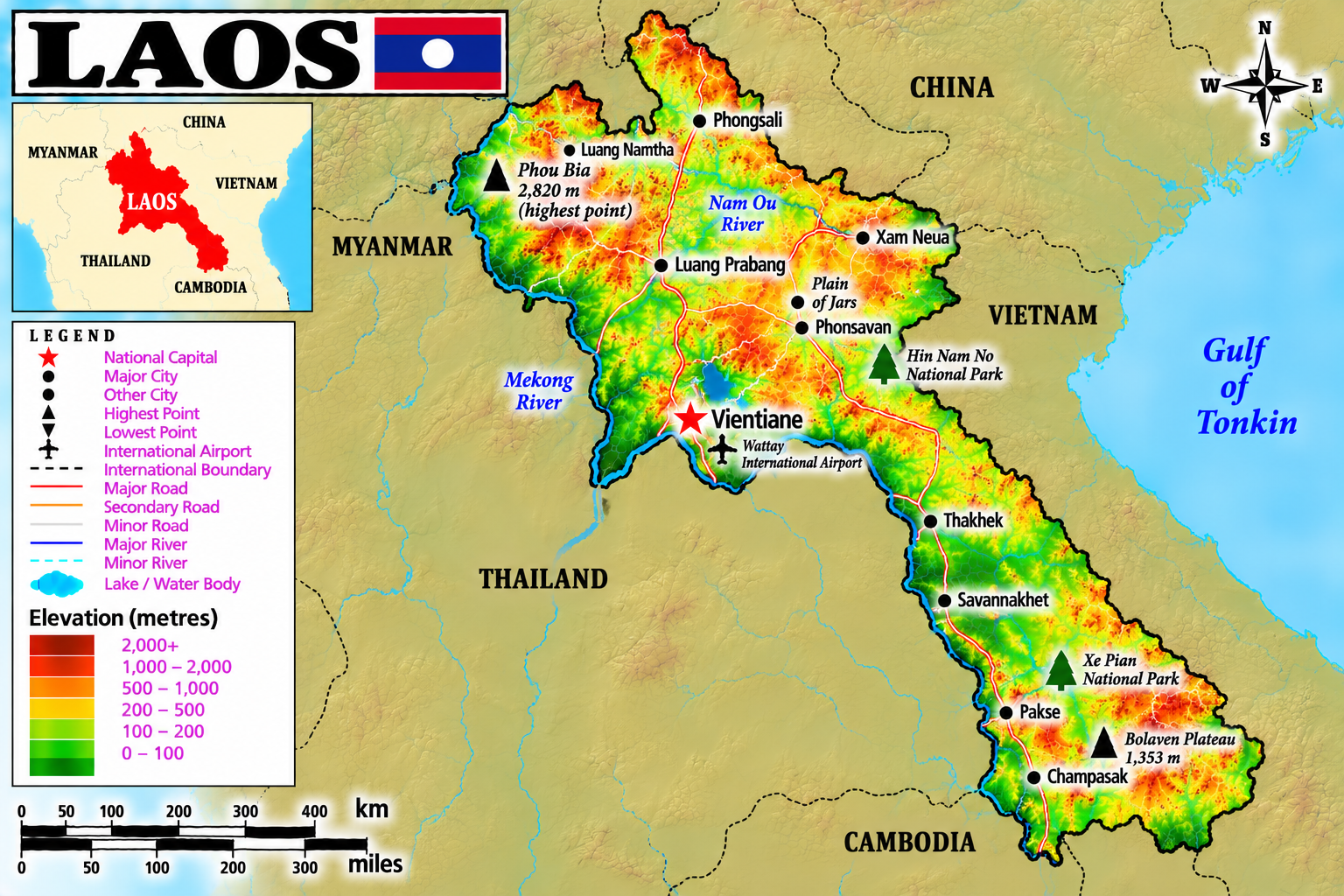
Laos — Detailed Physical Map
The Mekong River, Phou Bia and the Bolaven Plateau, Plain of Jars, Hin Nam No and Xe Pian parks, major cities and the capital Vientiane
Tourist Attractions

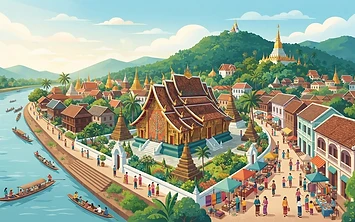
A UNESCO World Heritage city known for its well-preserved blend of traditional Lao and French colonial architecture. It serves as the spiritual heart of the country, filled with ancient temples and vibrant markets.
Experience the serene morning alms-giving ceremony where hundreds of monks walk through the streets.

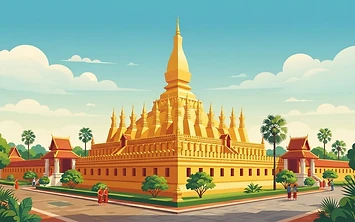
This massive gold-covered Buddhist stupa is the most important national monument in Laos. Its striking architecture serves as a powerful symbol of Lao nationalism and Buddhist devotion.
The brilliant golden exterior glows spectacularly against the blue sky, especially during sunset.

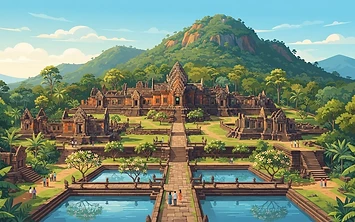
A dramatic Khmer temple complex dating back to the 7th to 12th centuries, nestled at the base of a mountain. It is a significant archaeological site that predates the famous Angkor Wat in Cambodia.
The ancient stone carvings and the elevated position offer a profound sense of history and spiritual connection.

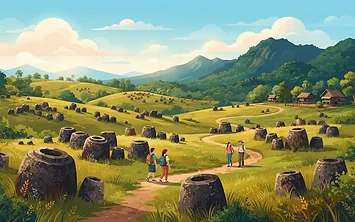
An enigmatic archaeological landscape featuring thousands of massive stone jars scattered across the plateau. These prehistoric vessels are believed to be linked to ancient burial practices from the Iron Age.
The mystery surrounding the origin and purpose of these giant stone vessels makes for a truly unique exploration.


A stunning three-tiered waterfall famous for its turquoise blue pools created by limestone deposits. The surrounding lush jungle provides a refreshing escape and beautiful walking trails.
Swimming in the vibrant, mineral-rich tiered pools is an unforgettable experience.

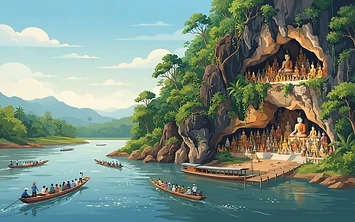
Located along the Mekong River, these two caves are packed with thousands of Buddha statues left by pilgrims over many centuries. They are accessible primarily by boat, offering a scenic journey along the river.
The sight of thousands of diverse Buddha images tucked into the limestone cliffside is deeply atmospheric.
Geography
Nature
Phou Bia
2,819 m / 9,249 ft
71.0% of land
≈ 168,128 km² of forest
FAO / World Bank, forest area (% of land area)
Explore the Nature Atlas4,350 km2,703 mi
It forms a large portion of the border between Laos and Thailand.
448 km278 mi
The river rises in the Phongsaly province near the border with China.
354 km220 mi
It is a major tributary of the Mekong and supports significant hydroelectric power.
370 km²143 sq mi · 50 m deep
Created by damming the Nam Ngum river to provide electricity for the country.
170 km²66 sq mi
This is a large freshwater lake located in the southern part of the country.
21 m69 ft
These falls are considered the largest waterfall by volume in Southeast Asia.
60 m197 ft
The tiers of this waterfall lead into clear turquoise pools popular with visitors.
River lengths are whole-river figures, including any section beyond Laos. Researched reference figures. Tap any name for where its name comes from and a Google Maps link.
Major Cities
- 1Capital
Viangchan
680,7982026
MapServes as the capital and largest city of Laos, situated along the banks of the Mekong River.
- 2
Xiangkhouang
288,7012026
MapHome to the mysterious Plain of Jars, a vast archaeological landscape featuring thousands of ancient stone megaliths.
- 3
Savannakhét
133,9922026
MapFunctions as a major regional economic hub connected to Thailand by the Second Thai-Lao Friendship Bridge.
- 4
Champasak
129,5052026
MapActs as the capital of Champasak Province and a key transit gateway to southern Laos and the Bolaven Plateau.
- 5
Khammouan
75,6412026
MapFeatures distinctive French colonial architecture and serves as a major trade point near the border with Thailand.
- 6
Louangphabang
58,1272026
MapHolds UNESCO World Heritage status for its well-preserved blend of traditional Lao and French colonial architecture.
- 7
Houaphan
50,5712026
MapLocated in the rugged mountains near the Vietnamese border and serves as the capital of Houaphan Province.
- 8
Xiangkhouang
40,5292026
MapServes as the administrative capital of Xieng Khouang Province and a gateway to the Plain of Jars sites.
- 9
Louangnamtha
30,8522026
MapKnown as the primary trekking and ecotourism hub for exploring the Nam Ha National Biodiversity Conservation Area.
- 10
Bolikhamxai
29,6122026
MapPositions itself as a key trading town located at the confluence of the Nam Xan and Mekong rivers.
- 11
Viangchan
27,0142026
MapAttracts visitors with its dramatic limestone karst scenery and outdoor activities along the Nam Song River.
- 12
Louangnamtha
25,3942026
MapRepresents a remote outpost famed for its diverse ethnic hill tribe cultures and traditional border market.
City populations are the latest official, UN or national-statistics estimates (2026–2026) compounded to 2026 at 1.3% a year (the nation's annual population growth rate); figures without a published update come from the open cities database (2020-era estimates) and are projected the same way.
Economy
Main exports
Laos's leading export commodities and products.
Tap any export to learn more. Spot prices in USD only for Live Data subscribers.
Main imports
Laos's leading import commodities and products.
Tap any import to learn more.
Military
Historical Timeline
48000 BCE
Arrival of Hoabinhian hunter-gatherers
Archaeological evidence, such as the Tam Pa Ling Cave fossils, indicates the earliest presence of modern humans in Laos dating back approximately 48,000 years. These early inhabitants laid the foundation for the diverse ethnic groups that later populated the Indochinese peninsula.
1353
Founding of the Kingdom of Lan Xang
King Fa Ngum united various principalities to establish the Kingdom of Lan Xang Hom Khao, the Land of a Million Elephants and the White Parasol. This event marked the beginning of the unified Lao state and established Buddhism as the national religion.
1707
Fragmentation of the Lan Xang Kingdom
Following internal disputes, the Lan Xang Kingdom split into three separate entities: Luang Phrabang, Vientiane, and Champasak. This division weakened the Lao territories and made them susceptible to external influence from neighboring powers.
1893
Establishment of the French Protectorate
France established a protectorate over Laos, incorporating it into the larger entity of French Indochina. This period introduced European colonial administration and infrastructure to the region.
1945
Proclamation of Lao Independence
Following the Japanese surrender in World War II, the Lao Issara movement declared independence from French rule. While independence was short-lived, it solidified the nationalist movement's aspirations for sovereignty.
1954
Recognition of Sovereign Independence
The Geneva Accords officially recognized Laos as an independent and sovereign constitutional monarchy. This concluded the First Indochina War and ended nearly six decades of French colonial administration.
1975
Founding of the Lao People's Democratic Republic
The Pathet Lao forces took control of the government, leading to the abdication of King Savang Vatthana. This established a communist one-party state, ending the monarchy and reshaping the nation's political trajectory.
1986
Implementation of the New Economic Mechanism
The government adopted the New Economic Mechanism, which initiated the transition from a centralized command economy to a market-oriented one. This reform encouraged foreign investment and private sector development.
2013
Accession to the World Trade Organization
Laos officially became a member of the World Trade Organization in 2013, marking a significant milestone in its integration into the global economy. This membership necessitated wide-ranging legislative and regulatory reforms.
2021
Inauguration of the China-Laos Railway
The high-speed railway connecting Vientiane to the Chinese border was inaugurated as part of the Belt and Road Initiative. This project significantly improved regional connectivity and boosted the country's logistics potential.
2024
Laos Holds the ASEAN Chairmanship
Laos assumed the rotating chairmanship of the Association of Southeast Asian Nations for the third time. The country focused on themes of regional connectivity and resilience amid complex geopolitical dynamics.
2025
Expansion of Clean Energy Initiatives
The government accelerated its commitment to renewable energy by finalizing major regional power export agreements with neighboring countries. This effort underscored the national strategy to become the battery of Southeast Asia.
National Anthem
ເພງຊາດລາວ
Sisana Sisane
Thongdy Sounthonevichit
1947
ຊາດລາວຕັ້ງແຕ່ໃດມາ ລາວທຸກຖ້ວນໜ້າເຊີດຊູສຸດໃຈ ຮ່ວມແຮງຮ່ວມຈິດຮ່ວມໃຈ ສາມັກຄີກັນເປັນກຳລັງດຽວ ເດັດດ່ຽວພ້ອມກັນກ້າວໜ້າ ບູຊາຊູກຽດຂອງຕົນ ສົ່ງເສີມໃຊ້ສິດເປັນເຈົ້າ ລາວທຸກຊົນເຜົ່າສະເໝີພາບກັນ ບໍ່ໃຫ້ຝູງສັດຕູມາລົບກວນ ລາວທຸກຊົນເຜົ່າຮ່ວມໃຈ ເສຍສະລະເພື່ອຊາດຂອງຕົນ ຍອມສະລະໄດ້ທຸກເວລາ ລາວຈະໄດ້ນຳພາຜືນແຜ່ນດິນທຳ
Pheng Xat Lao was composed by Dr. Thongdy Sounthonevichit in 1941 during the French protectorate period. The lyrics were originally written by Sisana Sisane to promote national unity and identity. It was officially adopted as the national anthem of the Kingdom of Laos in 1947. After the Pathet Lao took power in 1975 and the Lao People's Democratic Republic was established, the melody was retained but the lyrics were rewritten to reflect the new socialist ideology. The anthem is played daily across the country to instill national pride and honor the struggle for independence. It remains a central symbol of the state and is performed at all official government and public functions.
National Holidays
A three-day festival marking the traditional Lao new year, characterized by water splashing rituals and cleansing ceremonies. It reflects the Buddhist influence on Lao culture and the arrival of the hot season.
An international holiday observed in Laos to recognize the contributions and rights of workers in the national economy.
Commemorates the 1975 declaration of the Lao People's Democratic Republic, marking the end of the monarchy and the transition to the current political system.
Good News Today
Luang Prabang Half Marathon Draws Record 3,000 Runners for Children’s Healthcare
A record-breaking 3,000 runners participated in the annual charity half marathon to raise funds for the Lao Friends Hospital for Children. The event, which saw its highest turnout in 12 years, supports free pediatric healthcare for children across the country.
Fun Facts
Most Heavily Bombed Nation
Laos holds the grim world record as the most heavily bombed country in history per capita, due to extensive aerial bombardment during the Vietnam War era.
Mysterious Ancient Stone Jars
The Plain of Jars is a megalithic landscape featuring thousands of massive, mysterious stone jars that date back to the Iron Age and defy clear explanation.
Historical Land of Elephants
Laos was historically known as Lan Xang, which translates literally to The Land of a Million Elephants, reflecting its deep cultural connection to these animals.
National Dish of Larb
Larb is a zesty, meat-based salad seasoned with lime, fish sauce, and fresh herbs that serves as the beloved national dish of Laos.
Home of Karst Mountains
The limestone karst landscape of Vang Vieng creates a unique dramatic topography featuring towering cliffs and hidden caves that are world-famous for limestone formations.
Highland Coffee Bean Producers
The Bolaven Plateau in southern Laos provides the perfect cool, high-altitude climate for producing some of the highest quality Arabica and Robusta coffee beans in Southeast Asia.
Life Along The Mekong
The Mekong River serves as the lifeblood of the nation, providing a vital transportation artery that flows through almost the entire length of the country.
Sunrise Alms Giving Ritual
In Luang Prabang, locals participate in the daily morning tradition of Sai Bat, where residents provide alms to silent lines of passing Buddhist monks.
Si Phan Don Islands
The Si Phan Don region, known as the Four Thousand Islands, is a river archipelago located in the Mekong that features waterfalls and rare freshwater dolphins.
Traditional Silk Weaving Excellence
Laotian textiles are renowned for intricate patterns and natural dyes, with weaving traditions passed down through generations within villages like those in Houaphan province.
Chuckies Trivia Quiz
Chuckies Trivia Quiz
Fifteen questions on Laos — five easy, five medium, five hard. How far can you get?
Sports & Live Events
Language
Counting to 10
1
1
= 10 (n = 0)
World Dictionary
Discover and translate any word into all supported languages.