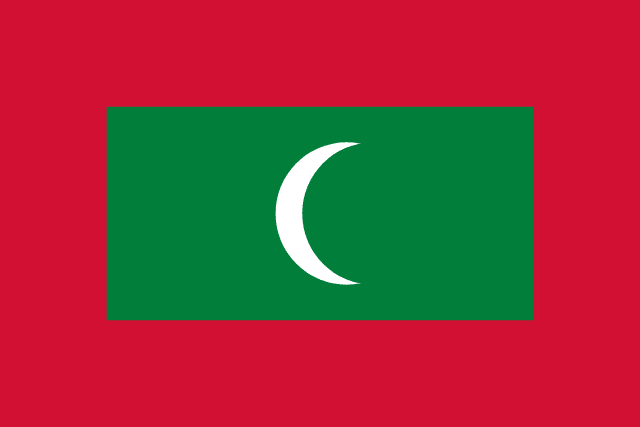

Maldives
Republic of Maldives
Asia
546,934
09:00 UTC+5
+960
.mv
Unnamed island
2 m · 7 ft
Indian Ocean
0 m · 0 ft
268,316
Male · 2026
268,316
Male · 2026
Location
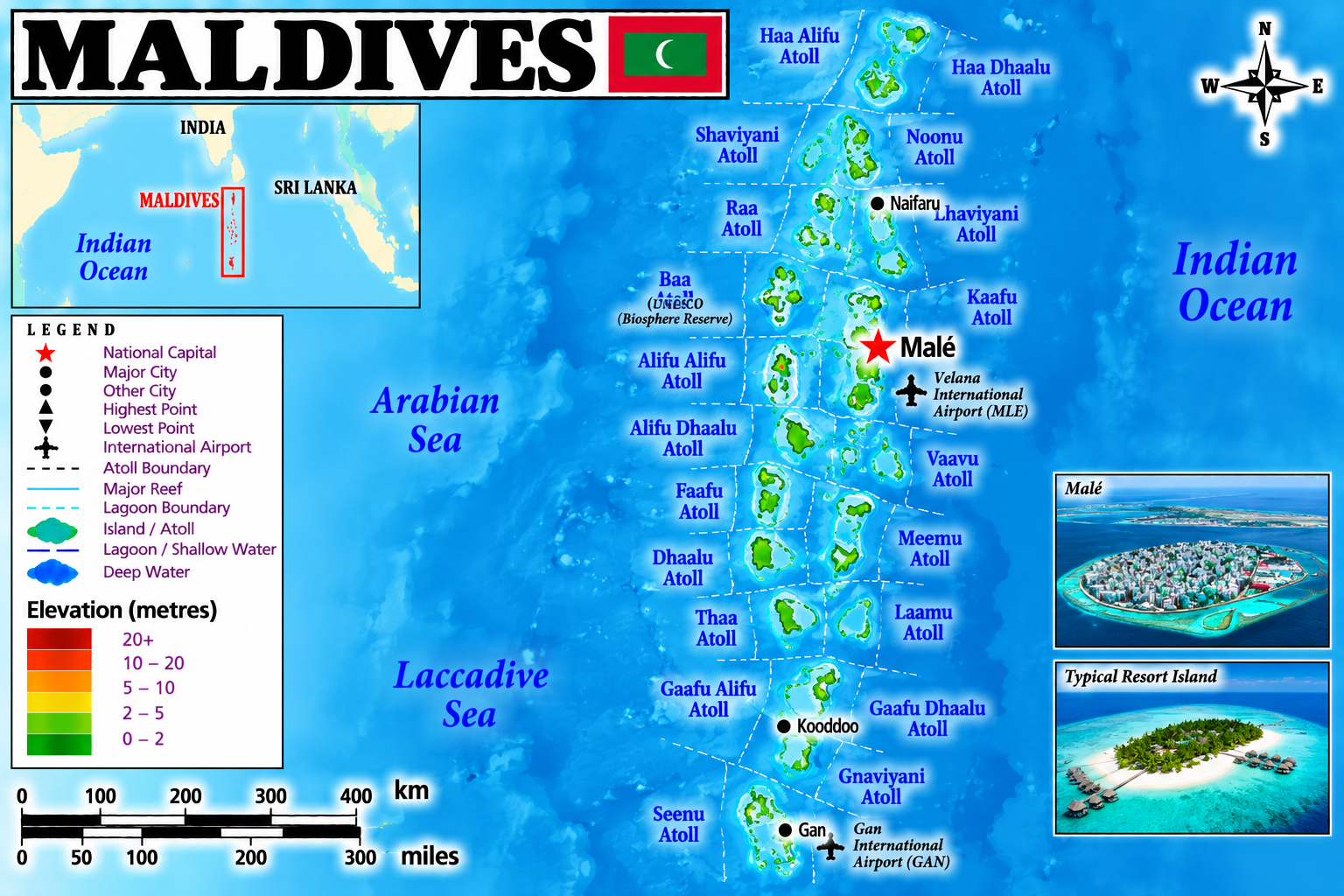
Maldives — Detailed Physical Map
The atoll chain from Haa Alifu to Seenu, the Baa Atoll reserve, Vaavu and Addu lagoons, reef boundaries and the capital Malé
Tourist Attractions

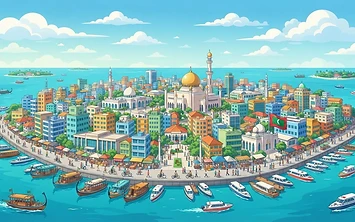
The vibrant capital of the Maldives serves as the nation's cultural and political heart, featuring bustling markets and historic sites. It offers a unique glimpse into local life away from the private resort islands.
Explore the city's lively markets and historic architecture to experience the authentic pulse of Maldivian culture.

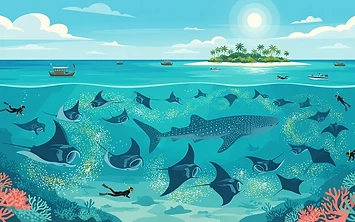
A protected marine area within a UNESCO World Biosphere Reserve, famous for attracting exceptionally high numbers of manta rays and whale sharks. It is one of the world's premier locations for witnessing mass marine feeding events.
Witness the incredible spectacle of hundreds of manta rays congregating to feed on plankton in the crystal-clear waters.

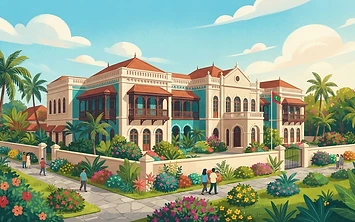
Housed in the former Sultan's Palace, this museum preserves the country's rich archaeological and royal heritage. It displays a vast collection of artifacts that chronicle the history of the Maldivian islands.
View the extensive collection of royal artifacts and historical items that tell the story of the Maldives' past.

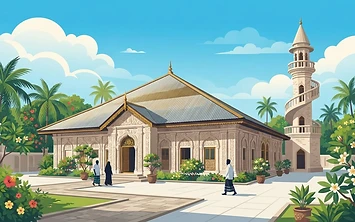
Constructed in 1656, this ancient mosque is renowned for its intricate coral stone carvings and traditional Islamic architectural design. It stands as one of the most significant historical landmarks in the capital.
Admire the stunning craftsmanship of the ancient coral stone walls and the mosque's historic golden dome.

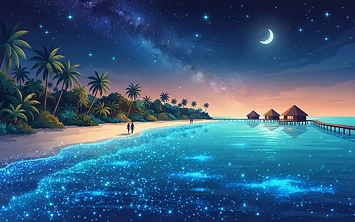
Famous for the 'Sea of Stars' phenomenon, this island's beach glows with bioluminescent plankton at night. The natural light display creates a magical, ethereal atmosphere along the shoreline.
Visit the beach after dark to see the water sparkle with natural bioluminescence.

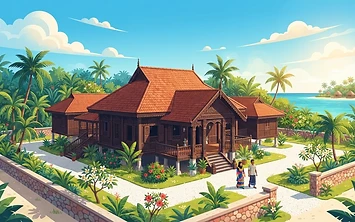
This historic wooden palace was the residence of Sultan Muhammad Thakurufaanu, a national hero who fought against colonial rule. It is a beautifully preserved site that offers insight into the life of Maldivian royalty.
Step inside the well-preserved palace to learn about the life of the king who founded the first national army.
Geography
Nature
Unnamed island
2 m / 7 ft
2.7% of land
≈ 8 km² of forest
FAO / World Bank, forest area (% of land area)
Explore the Nature Atlas1 km²0 sq mi
A protected wetland area located on the island of Hithadhoo.
River lengths are whole-river figures, including any section beyond Maldives. Researched reference figures. Tap any name for where its name comes from and a Google Maps link.
Major Cities
- 1Capital
Maale
249,0592026
MapServes as the densely populated capital and economic hub housing the country's main administrative and commercial institutions.
- 2
Addu
15,2752026
MapFunctions as the most populous district of Addu City, featuring significant historical ruins and a protected nature park.
- 3
Thiladhunmathee Dhekunuburi
11,2972026
MapActs as the regional center for the northern atolls and is famously known for its traditional mangrove forests.
- 4
Fuvammulah
9,5132026
MapUnique for being the only single-island atoll in the Maldives, distinguished by its freshwater lakes and fertile soil.
- 5
Huvadhuatholhu Dhekunuburi
6,8042026
MapOperates as a vital administrative capital for Gaafu Dhaalu Atoll, supporting local fishing and trade industries.
- 6
Faadhippolhu
5,2142026
MapRenowned for its long-standing history of tuna fishing and local craftsmanship, serving as the capital of Lhaviyani Atoll.
- 7
Nilandheatholhu Dhekunuburi
3,5432026
MapFeatures mysterious ancient Buddhist ruins known as hawittas, reflecting the island's pre-Islamic historical significance.
- 8
Ariatholhu Dhekunuburi
3,2802026
MapStands as the administrative center of Alif Dhaalu Atoll, known for its busy harbor and proximity to dive sites.
- 9
Huvadhuatholhu Uthuruburi
2,9412026
MapServes as the capital of Gaafu Alifu Atoll, supporting local economic development and essential public services for surrounding islands.
- 10
Maalhosmadulu Dhekunuburi
2,9062026
MapRecognized as the capital of Baa Atoll, acting as a crucial hub for the region's fishing and commercial activities.
- 11
Miladhunmadulu Uthuruburi
2,3012026
MapActs as the administrative capital of Shaviyani Atoll, providing essential government services and infrastructure to the local population.
- 12
Maalhosmadulu Uthuruburi
1,8992026
MapFunctions as the administrative center for Raa Atoll and plays a central role in the regional fishing industry.
City populations are the latest official, UN or national-statistics estimates (2026–2026) compounded to 2026 at 1.5% a year (the nation's annual population growth rate); figures without a published update come from the open cities database (2020-era estimates) and are projected the same way.
Economy
Main exports
Maldives's leading export commodities and products.
Tap any export to learn more. Spot prices in USD only for Live Data subscribers.
Main imports
Maldives's leading import commodities and products.
Tap any import to learn more.
Military
Historical Timeline
2000 BCE
Early settlement by Dravidian and Indo-Aryan peoples
Archaeological evidence suggests that early settlers from the Indian subcontinent and Sri Lanka established the first permanent communities in the Maldives around this time. These groups are considered the ancestors of the modern Maldivian people.
1153
Conversion to Islam
King Koimala converted to Islam, leading the nation to adopt the religion as its state faith. This transition significantly shaped the cultural and social development of the Maldives.
1558
Portuguese occupation
Portuguese forces captured Male and established a colonial presence in the islands. Their rule lasted for fifteen years until they were expelled by Muhammad Thakurufaanu.
1887
British Protectorate established
The Maldives signed an agreement with Great Britain, becoming a British protectorate. This allowed the islands to retain internal self-governance while Britain managed foreign affairs.
1965
Independence from Britain
The Maldives gained full political independence from the United Kingdom on July 26. This marked the end of the protectorate status and the start of sovereign statehood.
1968
Establishment of the Republic
Following a national referendum, the Sultanate was abolished and the first Republic of the Maldives was proclaimed. Ibrahim Nasir became the first President of the nation.
2004
Indian Ocean Tsunami
The nation suffered catastrophic damage from the Indian Ocean tsunami, which displaced thousands of people. The disaster led to a massive national rebuilding effort and prompted new climate resilience policies.
2008
Adoption of democratic constitution
A new democratic constitution was ratified, paving the way for the country's first multi-party presidential election. Mohamed Nasheed became the first democratically elected president.
2018
Democratic transition of power
Ibrahim Mohamed Solih won the presidential election, marking a peaceful democratic transition of power. This result was widely seen as a turning point for the nation's political stability.
2021
Election of Abdulla Shahid to UN Presidency
Maldivian Foreign Minister Abdulla Shahid was elected as President of the 76th session of the United Nations General Assembly. This was the first time a Maldivian held the highest office at the UN.
2023
Election of Mohamed Muizzu
Mohamed Muizzu won the presidential election, running on a platform focused on national sovereignty and development. He was inaugurated as the eighth President of the Maldives in November.
2024
Parliamentary supermajority for ruling party
The People's National Congress secured a historic supermajority in the parliamentary elections held in April. This outcome provided the government with the legislative support required to advance its domestic agenda.
National Anthem
Gaumee Salaam
Muhammad Jameel Didi
Pandit Wannakuwattawaduge Don Amaradeva
1972
Gaumee salaamee gaumee salaamee, Gaumee salaamee mi gulhun fanvarun. Mi gaumee mi gulhun faharaa kureeme, Baakee heyo baakee heyo, Dhen dhuniye gaumee salaamee.
The current national anthem of the Maldives, 'Gaumee Salaam', was adopted in 1972. The lyrics were written by the renowned Maldivian scholar and poet Muhammad Jameel Didi in 1948. For many years, the anthem was sung to a traditional tune, but a new melody was commissioned to better reflect the nation's identity. This melody was composed by the Sri Lankan musician Pandit Wannakuwattawaduge Don Amaradeva at the request of the Maldivian government. The song is performed at official state functions, sporting events, and public ceremonies to signify national pride. It emphasizes the theme of unity and the strength of the Maldivian people as an independent island nation.
National Holidays
This holiday commemorates the transition of the Maldives from a sultanate to a republic in 1968. It is marked by official ceremonies and parades throughout the country.
This day celebrates the victory of Muhammad Thakurufaanu over Portuguese colonial forces in 1573. It is based on the Islamic lunar calendar and symbolizes Maldivian independence and sovereignty.
This day marks the failure of the 1988 coup attempt in the Maldives, where mercenaries attacked the capital. It honors the Maldivian soldiers who protected the nation's sovereignty.
Good News Today
MV+ Celebrates Local Community Champions at MV+ Community Impact Awards 2026
The MV+ Community Impact Awards 2026 honored various civil society organizations and private businesses for their exceptional contributions to community service and healthcare. The event also featured a successful fundraising appeal to support local NGOs in sustaining their vital health initiatives.
Fun Facts
Lowest Lying Nation
The Maldives is the flattest country in the world, with an average ground level of only 1.5 meters above sea level.
The National Tree Symbol
The coconut palm is the national tree, reflecting its deep cultural and economic importance to the island chain's history.
Whale Shark Sanctuary
The Maldives is one of the few places globally where whale sharks can be spotted throughout the year in their natural habitat.
Unique Weekend Calendar
In the Maldives, the weekend traditionally falls on Friday and Saturday, reflecting the Islamic culture of the islands.
Natural Coral Structures
The entire nation is composed of 26 natural atolls, which are actually massive coral structures built upon ancient volcanic foundations.
Tuna Export Powerhouse
The pole-and-line fishing method is strictly practiced here, ensuring sustainable and dolphin-friendly tuna harvesting for global export.
The Oldest Mosque Structure
The Hukuru Miskiy in the capital Male was built in 1656 and is constructed entirely out of carved coral stone.
Historical Cowrie Currency
Historically, cowrie shells were used as an international currency in the Maldives and were traded extensively across the Indian Ocean.
Underwater Cabinet Meeting
In 2009, the Maldivian government held the world's first underwater cabinet meeting to highlight the dangers of rising sea levels.
Floating Island Geography
There are over 1,190 islands in the archipelago, but only about 200 of them are actually inhabited by local populations.
Chuckies Trivia Quiz
Chuckies Trivia Quiz
Fifteen questions on Maldives — five easy, five medium, five hard. How far can you get?
Sports & Live Events
Language
Counting to 10
1
1
= 10 (n = 0)
World Dictionary
Discover and translate any word into all supported languages.