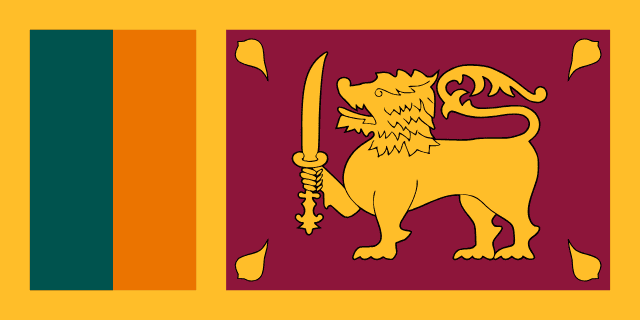

Sri Lanka
Democratic Socialist Republic of Sri Lanka
Asia
21,926,677
12:36 UTC+5:30
+94
.lk
Pidurutalagala
2,524 m · 8,281 ft
Indian Ocean
0 m · 0 ft
115,826
Sri Jayawardenepura Kotte · 2026
2,589,898
Colombo · 2026
Location
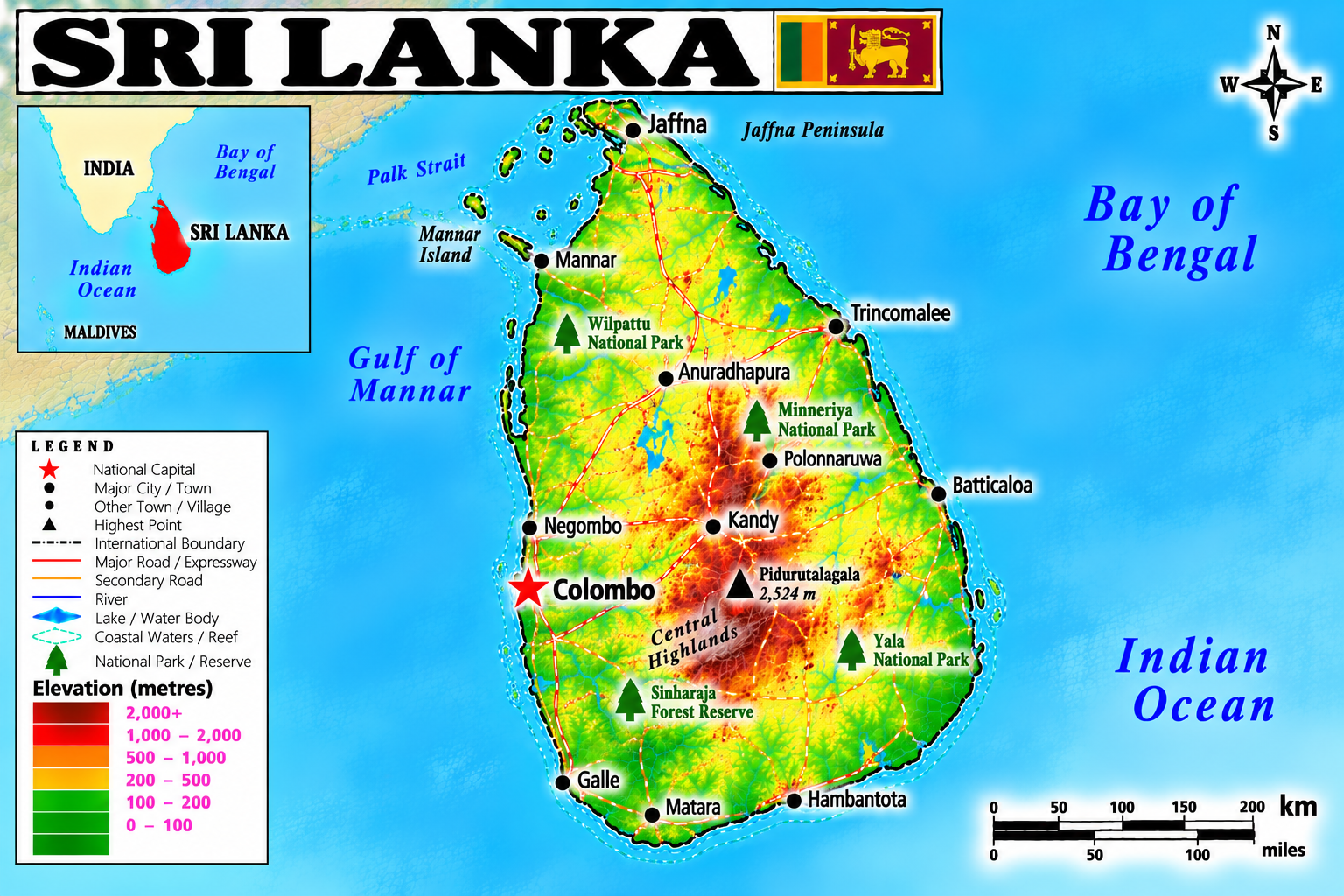
Sri Lanka — Detailed Physical Map
The Central Highlands and Pidurutalagala, Wilpattu, Minneriya, Yala and Sinharaja reserves, Jaffna Peninsula, the coastal towns and the capital Colombo
Tourist Attractions
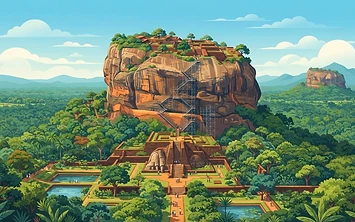
An ancient rock fortress and UNESCO World Heritage site featuring a palace built atop a massive column of rock, famous for its frescoes and lion-shaped entrance.
The breathtaking panoramic views from the summit are unmatched.
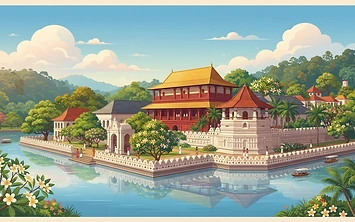
A sacred Buddhist temple located within the royal palace complex that houses the relic of the tooth of the Buddha.
It is the most significant spiritual site in the country and a center of cultural heritage.

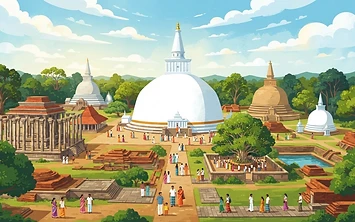
The first ancient capital of Sri Lanka, this vast archaeological site contains well-preserved ruins of palaces, monasteries, and massive stupas.
The sacred Sri Maha Bodhi tree is a must-see for its immense historical and religious importance.

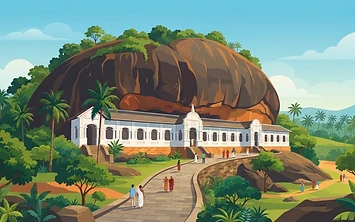
A UNESCO World Heritage site consisting of five cave temples filled with over 150 Buddha statues and ancient murals dating back 2,000 years.
The intricate cave paintings and statues offer a profound look into ancient religious artistry.

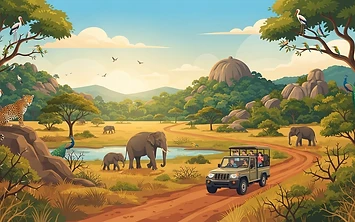
Sri Lanka's most popular national park, known for its high density of leopards, elephants, and diverse bird species.
It provides the best opportunity to observe Sri Lankan wildlife in their natural habitat.

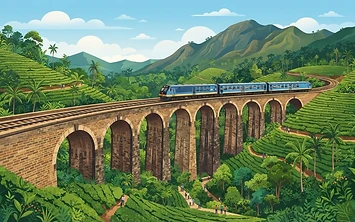
A stunning colonial-era railway bridge built entirely of stone, brick, and cement without any steel, nestled amidst lush tea plantations.
Watching the train pass over the bridge against the backdrop of the emerald hills is a quintessential Sri Lankan experience.
Geography
Nature
Pidurutalagala
2,524 m / 8,281 ft
33.0% of land
≈ 21,651 km² of forest
FAO / World Bank, forest area (% of land area)
Explore the Nature Atlas335 km208 mi
Rises in the Hatton Plateau and flows into the Indian Ocean at Trincomalee.
170 km106 mi
Second longest river in Sri Lanka running through the North Western Province.
145 km90 mi
Provides the primary water supply for the city of Colombo.
23 km²9 sq mi · 12 m deep
Constructed by King Parakramabahu the Great as a massive irrigation reservoir.
19 km²7 sq mi
Renowned for the seasonal gathering of wild elephants on its receding banks.
1 km²0 sq mi · 6 m deep
Created by British Governor William Gregory in the hill country town of Nuwara Eliya.
263 m863 ft
Holds the record as the tallest waterfall in Sri Lanka.
220 m722 ft
Features a series of natural pools popular for swimming at the summit.
River lengths are whole-river figures, including any section beyond Sri Lanka. Researched reference figures. Tap any name for where its name comes from and a Google Maps link.
Major Cities
- 1Capital
Western
468,3772026
MapServes as the commercial capital and largest city of Sri Lanka, known for its busy harbor and colonial architecture.
- 2
Western
243,8422026
MapFunctions as a rapidly developing residential suburb within the Colombo District located near the scenic Bolgoda Lake.
- 3
Western
211,7062026
MapHosts the national cancer hospital and serves as a major commercial transit point for suburban commuters.
- 4
Western
174,0482026
MapOperates as a major coastal city and fishing port known for its proximity to the international airport.
- 5
Western
157,1642026
MapRecognized as the primary hub for the nation's furniture and woodcraft industry alongside its strong maritime heritage.
- 6
Western
155,8962026
MapFeatures a famous historic seaside hotel built by a British governor for his local lover in the nineteenth century.
- 7Capital
Western
119,8442026
MapActs as the official administrative capital of Sri Lanka, housing the parliament building and various government institutions.
- 8
Central
111,2532026
MapContains a massive hydroelectric dam and a reservoir that submerged numerous ancient villages in the central mountains.
- 9
Eastern
94,3882026
MapFamed for its singing fish phenomena in the lagoon and its extensive system of serene interconnected waterways.
- 10
Central
86,8952026
MapHouses the sacred Temple of the Tooth and serves as the cultural capital of the historic hill country.
- 11
Sabaragamuwa
75,0972026
MapKnown as the gem capital of the nation, famous for its rich history of precious stone mining and trade.
- 12
Sabaragamuwa
57,3252026
MapServes as a vital trade point on the main route connecting the central highlands to the capital city.
City populations are the latest official, UN or national-statistics estimates (2025–2026) compounded to 2026 at 0.57% a year (the nation's annual population growth rate); figures without a published update come from the open cities database (2020-era estimates) and are projected the same way.
Economy
Main exports
Sri Lanka's leading export commodities and products.
Tap any export to learn more. Spot prices in USD only for Live Data subscribers.
Main imports
Sri Lanka's leading import commodities and products.
Tap any import to learn more.
Military
Historical Timeline
38000 BCE
Balangoda Man habitation
Archaeological evidence indicates the earliest presence of anatomically modern humans, known as Balangoda Man, in the island's central hills. These indigenous hunter-gatherer populations are the ancestors of the modern Vedda people.
377 BCE
Establishment of Anuradhapura Kingdom
King Pandukabhaya established Anuradhapura as the capital, marking the formalization of the Sinhalese monarchy. This period saw the rise of a highly advanced hydraulic civilization.
247 BCE
Introduction of Buddhism
Mahinda, the son of the Indian Emperor Ashoka, arrived in Sri Lanka to introduce Buddhism to King Devanampiya Tissa. This event fundamentally shaped the culture, art, and national identity of the island.
1505
Arrival of the Portuguese
Portuguese explorer Lourenço de Almeida arrived in the coastal city of Colombo. This began the era of European colonial influence that would persist for over four centuries.
1815
British annexation of the Kandyan Kingdom
The Kandyan Convention was signed, ending the sovereignty of the last independent Sinhalese kingdom. This brought the entire island under British imperial rule.
1948
Independence from British Rule
Sri Lanka (then Ceylon) gained formal independence from the British Empire on February 4. Don Stephen Senanayake became the first Prime Minister of the dominion.
1960
Election of the world's first female Prime Minister
Sirimavo Bandaranaike became the first woman in modern history to be elected as the head of a government. She led the Sri Lanka Freedom Party to victory in the parliamentary elections.
1983
Beginning of the Sri Lankan Civil War
The 'Black July' anti-Tamil riots sparked a long-term armed conflict between the government and the Liberation Tigers of Tamil Eelam. The war continued for 26 years before concluding in 2009.
2015
Democratic transition of power
Maithripala Sirisena defeated incumbent Mahinda Rajapaksa in a presidential election, leading to a period of political reform. This marked a significant shift in the country's governance structure.
2022
Aragalaya protests and economic collapse
Massive public protests, known as the Aragalaya, erupted due to severe economic instability and fuel shortages. These protests led to the resignation of President Gotabaya Rajapaksa.
2023
IMF bailout and debt restructuring
The government secured a major bailout package from the International Monetary Fund to stabilize the economy. This marked the beginning of a challenging period of fiscal reform and debt restructuring.
2024
Election of Anura Kumara Dissanayake
Anura Kumara Dissanayake was elected as the ninth President of Sri Lanka in the September 2024 elections. This victory marked the first time a candidate from the National People's Power alliance held the presidency.
National Anthem
ශ්රී ලංකා මාතා
Ananda Samarakoon
Ananda Samarakoon
1951
ශ්රී ලංකා මාතා - අප ශ්රී ලංකා මාතා නමෝ නමෝ නමෝ නමෝ මාතා සුපෙත් ගොමු පිරි දරණි සැකැති පැතිර ජය භූමි රම්යා - අප ශ්රී ලංකා ගාතී ගානා ජීවයේ දාතා නමෝ නමෝ මාතා බල විරිය සැම සපිරි - අප ශ්රී ලංකා නොපිරිහෙන දියුණුව සදනා ජය භූමි රම්යා - අප ශ්රී ලංකා ගාතී ගානා ජීවයේ දාතා නමෝ නමෝ මාතා
The national anthem of Sri Lanka was composed by Ananda Samarakoon in 1940 as a patriotic song titled 'Namo Namo Matha'. It was officially adopted as the national anthem in 1951, replacing 'God Save the King'. The composition was influenced by Rabindranath Tagore, who mentored Samarakoon at Visva-Bharati University in India. While there was a controversy in 1951 regarding the first line, the original version was restored in 1952. In 1961, a minor change was made to the lyrics, but the song has remained largely unchanged since then. The anthem is recognized as a vital symbol of Sri Lankan identity and national unity, sung in both the Sinhala and Tamil languages.
National Holidays
This day commemorates Sri Lanka's political independence from British rule in 1948. It is marked by national ceremonies, parades, and presidential addresses.
This holiday marks the transition of the sun from the house of Pisces to Aries and the end of the harvest season. It is a major cultural festival celebrated by both Sinhalese and Tamil communities through traditional rituals and customs.
This day commemorates the birth, enlightenment, and passing of Gautama Buddha. It is the most significant religious festival for Buddhists in Sri Lanka, characterized by religious observances and the lighting of lanterns.
Known as the Festival of Lights, it is celebrated by the Hindu community to mark the victory of light over darkness and good over evil. The day is observed by lighting oil lamps and performing traditional family prayers.
This day commemorates the birth of Jesus Christ. It is a public holiday celebrated by Christians across the country with church services and festive gatherings.
Good News Today
Sri Lanka launches nationwide operation to protect elephants
The government has initiated the 'Hasthi Sena' operation to reduce human-elephant conflict and protect the country's elephant population. The program includes strict enforcement against illegal firearms and snares that threaten these animals.
Fun Facts
Oldest Human-Planted Tree
The Jaya Sri Maha Bodhi in Anuradhapura is the oldest human-planted tree in the world with a recorded history of over 2,200 years.
Largest Elephant Gathering
The Minneriya National Park hosts 'The Gathering,' the largest known wild Asian elephant congregation on Earth, occurring annually during the dry season.
Gemstone Island Paradise
Sri Lanka is known as the 'Gem Island' due to its incredible geological history, producing some of the world's finest blue sapphires and star sapphires.
Global Tea Powerhouse
Formerly known as Ceylon, the island is one of the world's leading tea exporters, famed for its distinctively aromatic and brisk-tasting Ceylon black tea.
Scenic Mountain Rail Routes
The train journey from Kandy to Ella is frequently voted one of the most scenic railway trips in the world, winding through misty tea plantations.
Oldest Mentions of Buddhism
The Tripitaka, the core sacred texts of Theravada Buddhism, were first written down in Sri Lanka at the Aluvihare Rock Temple in the 1st century BCE.
World-Class Surfing Hotspots
Arugam Bay is internationally recognized as a premier surfing destination, boasting one of the best point breaks in the entire Indian Ocean.
Versatile Coconut Culture
The coconut palm is so vital that it is incorporated into almost every aspect of life, from traditional Sri Lankan sambols to timber and coir production.
Unique Traditional Stilt Fishing
Stilt fishing is an iconic heritage practice unique to the southern coast, where fishermen balance on high poles to catch fish without disturbing the water.
Rich Culinary Spice Heritage
Sri Lankan cuisine is famous for using the highest quality true cinnamon, which is native to the island and historically sought after by ancient spice traders.
Chuckies Trivia Quiz
Chuckies Trivia Quiz
Fifteen questions on Sri Lanka — five easy, five medium, five hard. How far can you get?
Sports & Live Events
Language
Counting to 10
1
1
= 10 (n = 0)
World Dictionary
Discover and translate any word into all supported languages.