

Syria
Syrian Arab Republic
Asia
23,833,863
07:23 UTC+3
+963
.sy
Mount Hermon
2,814 m · 9,232 ft
Sea of Galilee
-200 m · -656 ft
2,024,003
Damascus · 2026
2,024,003
Damascus · 2026
Location
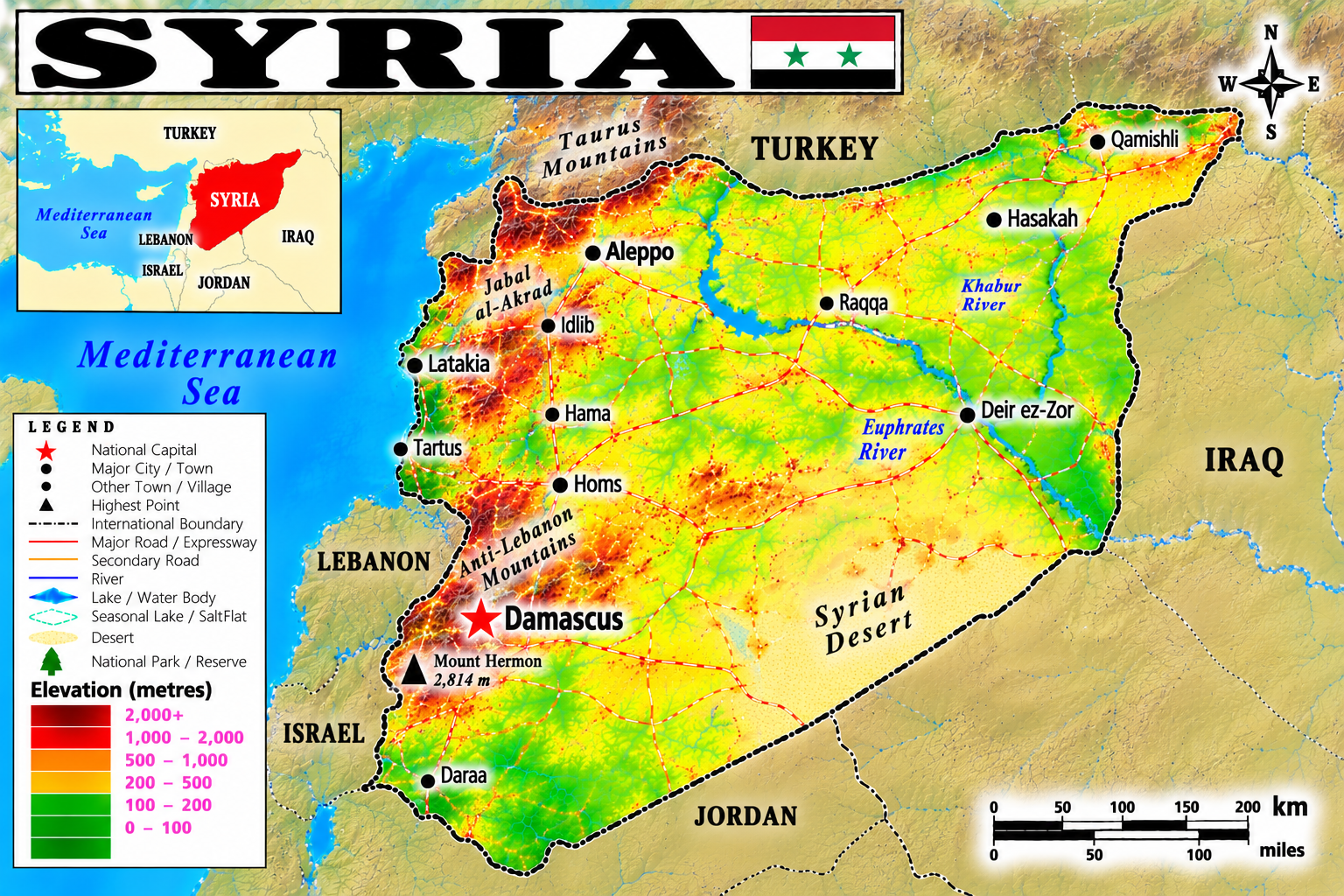
Syria — Detailed Physical Map
The Anti-Lebanon Mountains and Mount Hermon, Euphrates and Khabur rivers, the Syrian Desert, Mediterranean coast, major cities and the capital Damascus
Tourist Attractions

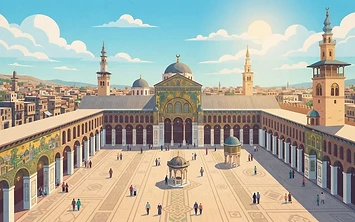
Also known as the Great Mosque of Damascus, this is one of the largest and oldest mosques in the world, built on a site that has served as a place of worship for millennia. It features stunning mosaics and a courtyard that provides a peaceful escape from the bustling city.
It is considered the fourth holiest site in Islam and a masterpiece of early Islamic architecture.

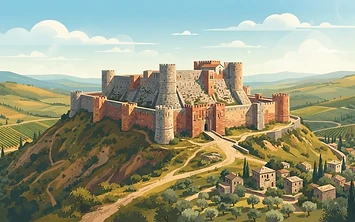
Perched on a high hill, this massive Crusader castle is widely regarded as one of the best-preserved medieval fortresses in the world. It served as the headquarters for the Knights Hospitaller during the 12th and 13th centuries.
Its immense scale and remarkably intact defensive walls offer a vivid window into medieval military history.

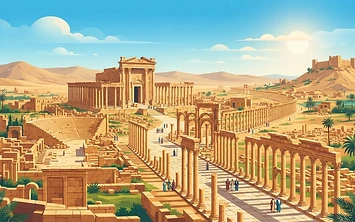
Once a thriving caravan city on the Silk Road, Palmyra is famous for its extensive Roman-era ruins, including a grand colonnaded street and the Temple of Bel. It remains a symbol of Syria's deep connection to ancient civilizations.
The site's unique blend of Greco-Roman architecture and local traditions creates an unforgettable desert landscape.

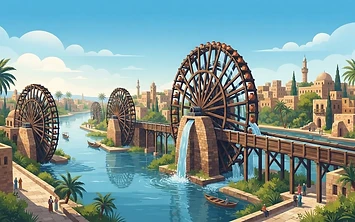
These massive, ancient wooden waterwheels, known as norias, have been used for centuries to lift water from the Orontes River to irrigate the city's gardens and fields. They are iconic symbols of Hama and represent a unique feat of traditional engineering.
The rhythmic sound and sight of these historic wheels turning are a quintessential experience in Hama.

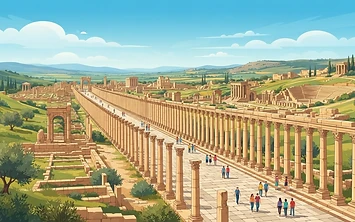
Apamea is an ancient city renowned for its exceptionally long and well-preserved colonnaded street, which stretches for nearly two kilometers. It offers visitors a chance to walk through the remains of a grand Hellenistic and Roman urban center.
The sheer length and architectural detail of the ancient colonnade make it one of the most impressive ruins in the region.

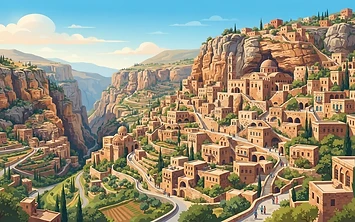
This historic mountain town is famous for its ancient monasteries, such as Mar Sarkis and Mar Taqla, carved directly into the cliffs. It is also one of the few places in the world where Western Aramaic, the language of Jesus, is still spoken.
The town offers a rare, living connection to ancient linguistic and religious history.
Geography
Nature
Mount Hermon
2,814 m / 9,232 ft
2.8% of land
≈ 5,185 km² of forest
FAO / World Bank, forest area (% of land area)
Explore the Nature Atlas2,800 km1,740 mi
Rises in the Armenian Highlands and flows through Turkey into Syria and Iraq.
571 km355 mi
Flows north through Lebanon and Syria before emptying into the Mediterranean Sea in Turkey.
486 km302 mi
Largest tributary of the Euphrates river and flows entirely within Syria.
610 km²236 sq mi
Largest lake in Syria created by the construction of the Tabqa Dam.
60 km²23 sq mi
Reservoir created by the ancient Homs Dam on the Orontes river.
—
Natural spring-fed lake located in the Daraa Governorate.
—
Popular natural attraction located near the border with Jordan.
River lengths are whole-river figures, including any section beyond Syria. Researched reference figures. Tap any name for where its name comes from and a Google Maps link.
Major Cities
- 1
Ḩalab
4,105,5212026
MapAncient trade hub featuring a historic citadel and a famous covered souq dating back to the Middle Ages.
- 2Capital
Dimashq
1,461,2902026
MapOldest continuously inhabited city globally and the political, cultural, and administrative capital of the country.
- 3
Ḩimş
989,4362026
MapMajor industrial center located at a strategic crossroads connecting Damascus to the northern regions and coastal areas.
- 4
Al Lādhiqīyah
606,1862026
MapPrimary port city on the Mediterranean coast serving as a critical gateway for maritime trade and shipping.
- 5
Dayr az Zawr
523,2702026
MapRegional hub for the agricultural and petroleum industries situated along the banks of the middle Euphrates River.
- 6
Al Ḩasakah
508,0372026
MapAgricultural center located in the fertile Khabur River valley, known for its significant grain and cotton production.
- 7
Ḩamāh
453,8662026
MapHistoric river city celebrated for its iconic ancient wooden waterwheels that once supplied local irrigation needs.
- 8
Ar Raqqah
416,1382026
MapStrategic location on the Euphrates River historically served as the capital of the Abbasid Caliphate under Harun al-Rashid.
- 9
Al Ḩasakah
315,4002026
MapCommercial city near the Turkish border acting as a vital center for trade and regional transport connectivity.
- 10
Idlib
165,0002026
MapAgricultural region renowned for extensive olive groves and the production of high-quality olive oil.
- 11
Rīf Dimashq
149,1752026
MapReligious destination housing the shrine of Zaynab bint Ali, drawing significant pilgrimage from across the Islamic world.
- 12
Dar‘ā
107,5002026
MapHistoric trade station situated on the border with Jordan, historically significant for transit between Damascus and Amman.
City populations are the latest official, UN or national-statistics estimates (2026–2026) compounded to 2026 at 1.5% a year (the nation's annual population growth rate); figures without a published update come from the open cities database (2020-era estimates) and are projected the same way.
Economy
Main exports
Syria's leading export commodities and products.
Tap any export to learn more. Spot prices in USD only for Live Data subscribers.
Main imports
Syria's leading import commodities and products.
Tap any import to learn more.
Military
Historical Timeline
10000 BCE
Early Neolithic Settlements in Syria
The region of Syria was home to some of the earliest human settlements, including Mureybet, representing the transition to agriculture and sedentary life.
2400 BCE
Rise of the Ebla Empire
Ebla became a major commercial hub and political power, leaving behind the Ebla tablets which provide significant insight into ancient Near Eastern linguistics and history.
64 BCE
Roman Annexation of Syria
General Pompey the Great annexed the region, incorporating it into the Roman Empire as a province which became crucial for Roman trade and defense.
661
Establishment of the Umayyad Caliphate
Damascus became the capital of the vast Umayyad Caliphate, marking a golden age of Islamic administration, culture, and architecture in the region.
1260
Battle of Ain Jalut
Mamluk forces stopped the Mongol expansion in Syria, significantly altering the political trajectory of the Levant and preserving Islamic centers.
1516
Ottoman Conquest of Syria
The Ottoman Empire defeated the Mamluks at the Battle of Marj Dabiq, bringing Syria under Ottoman rule for the next four centuries.
1946
Independence from French Mandate
Syria gained full independence as a republic on April 17, 1946, following the evacuation of the last French troops.
1963
The Ba'athist Revolution
The Ba'ath Party seized power through a military coup, initiating decades of single-party socialist rule that transformed the Syrian political landscape.
2011
Outbreak of the Syrian Civil War
Civil protests began in March 2011, which rapidly escalated into a multifaceted armed conflict involving international intervention and humanitarian crises.
2015
Russian Military Intervention
The Russian Federation launched a major air campaign in support of the Syrian government, dramatically altering the military balance of the conflict.
2023
Reinstatement to the Arab League
After a decade of suspension due to the ongoing conflict, Syria was officially readmitted to the Arab League, signaling a shift in regional diplomacy.
2025
Ongoing Regional Geopolitical Adjustments
Syria continued navigating complex diplomatic normalization processes with several regional neighbors amidst ongoing security challenges and internal economic recovery efforts.
National Anthem
حماة الديار
Khalil Mardam Bey
Muhammad Salim Al-Fulayfil and Ahmad Salim Al-Fulayfil
1936
حُمَاةَ الدِّيَارِ عَلَيْكُمْ سَلَامْ أَبَتْ أَنْ تُذَلَّ النُّفُوسُ الْكِرَامْ عَرِينُ الْعُرُوبَةِ بَيْتٌ حَرَامْ وَعَرْشُ الشُّمُوسِ حِمَانَا الْحُمَامْ وَرُوحُ الأَصِيلِ بَرُّوقٌ حِسَامْ سَمَاؤُكَ قَسَمٌ لَنَا وَالْغَمَامْ بِعَزْمٍ مَضَيْنَا وَعِزٍّ دَوَامْ وَكُنَّا نُقَاوِمُ بَأْسَ اللِّئَامْ نَسِيرُ بِفَخْرٍ وَحُبٍّ وَئَامْ وَحَوْلَ لِوَانَا مَدَاهُ الْحُطَامْ شِعَارُ السَّلَامِ وَهَدْيُ الْوِئَامْ عَلَى قِمَمِ الْمَجْدِ يَعْلُو الْهُمَامْ
The Syrian national anthem, 'Humat ad-Diyar', was written by the poet Khalil Mardam Bey in 1936 during the French Mandate for Syria and the Lebanon. The music was composed by brothers Muhammad and Ahmad Salim Al-Fulayfil, who are well-known for their contributions to many Arab national songs. It was originally adopted in 1936 as the anthem for the Syrian Republic. Following the 1958 union with Egypt to form the United Arab Republic, the anthem was replaced by a combined one, but it was restored as the sole national anthem in 1961 after the dissolution of the union. The lyrics reflect themes of national pride, resilience, and the noble character of the Syrian people. It remains a central symbol of Syrian national identity and is played at all official state functions and patriotic events.
National Holidays
This holiday commemorates the 1963 coup d'état that brought the Ba'ath Party to power in Syria.
This day marks the anniversary of the departure of the last French troops from Syria in 1946, signaling the end of the French mandate.
This is an international holiday observed to celebrate the economic and social achievements of workers.
This day honors the Syrian nationalists who were executed by the Ottoman Empire in Damascus and Beirut in 1916.
This holiday commemorates the start of the October War in 1973, when Syrian forces launched an offensive against Israeli positions in the Golan Heights.
Good News Today
SARC and Swedish Red Cross Launch Sustainable Return Program
The Syrian Arab Red Crescent and the Swedish Red Cross have launched a new program to support the voluntary and sustainable return of displaced families. The initiative provides cash grants for housing repairs, vocational training, and support for restoring agricultural activities in communities receiving returnees.
Fun Facts
One Of World's Oldest Capitals
Damascus is widely considered one of the oldest continuously inhabited cities in human history.
Birthplace Of The Alphabet
The city of Ugarit was where the world's first known alphabet was discovered, dating back over 3,000 years.
Ancient Aleppo Soap Craft
Aleppo is famous for its artisanal laurel and olive oil soap, a recipe that has remained unchanged for centuries.
Majestic Krak des Chevaliers
This massive 12th-century crusader castle is considered one of the best-preserved medieval fortresses in the world.
The Origin Of Kibbeh
Kibbeh, a dish of spiced ground meat and bulgur, is the national dish and is prepared in dozens of regional ways.
Roman Ruins Of Palmyra
Palmyra was once a wealthy caravan city and a major cultural center of the ancient world under the Roman Empire.
Rich Mediterranean Orchard Heritage
Syria is home to ancient orchards producing some of the world's most aromatic citrus and pomegranate fruits.
Damask Fabric Tradition
The luxurious reversible patterned fabric known as Damask takes its name directly from the city of Damascus.
Arabic Music Theory Hub
Syria has historically been the leading center for traditional Arabic music theory and instrumental musical composition.
The Night Sky Traditions
Ancient Syrian civilizations were among the first to map the constellations and use astronomy for agricultural timing.
Chuckies Trivia Quiz
Chuckies Trivia Quiz
Fifteen questions on Syria — five easy, five medium, five hard. How far can you get?
Sports & Live Events
Language
Counting to 10
1
1
= 10 (n = 0)
World Dictionary
Discover and translate any word into all supported languages.