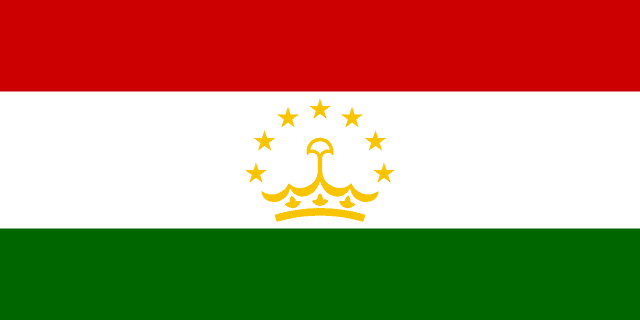
Tajikistan
Asia

10,500,000
18:29 UTC+5
+992
Location
Geography
Economy
Main exports
Tajikistan's leading export commodities and products.
Subscribe to Live Data for live spot prices
Live commodity prices on every nation's exports — $100 AUD/year.
Tap any export to learn more. Spot prices in USD only for Live Data subscribers.
Main imports
Tajikistan's leading import commodities and products.
Tap any import to learn more.
Military
Historical Timeline
50000 BCE
Early Human Settlement in Tajikistan
Archaeological findings indicate that early human groups occupied the Kul'dara and Karatau sites during the Paleolithic era. These early inhabitants represent the foundational presence of humans in the region.
329 BCE
Conquest by Alexander the Great
Alexander the Great conquered the region of Sogdiana, integrating the territory into the Hellenistic world. This period saw the spread of Greek cultural influences and the establishment of new urban centers.
710
Arab Conquest and Islamization
The Umayyad Caliphate completed its conquest of Transoxiana, leading to the gradual conversion of the local population to Islam. This transition fundamentally altered the cultural and religious landscape of the region.
875
Establishment of the Samanid Empire
The Samanid dynasty rose to power in Central Asia, marking a golden age for Persian culture, literature, and science. The capital at Bukhara became a major center for intellectual development.
1219
Mongol Invasion of Central Asia
Genghis Khan led the Mongol armies into Transoxiana, resulting in the destruction of major cities and the end of the Khwarazmian Empire. The invasion caused massive loss of life and shifted regional power structures.
1868
Russian Empire Annexation
The Emirate of Bukhara became a protectorate of the Russian Empire following a series of military defeats. This began a period of Russian imperial influence that lasted until the early twentieth century.
1929
Formation of the Tajik SSR
The Tajik Soviet Socialist Republic was established as a constituent republic of the Soviet Union. This formalization created the administrative precursor to the modern Tajik state.
1991
Declaration of Independence
Following the collapse of the Soviet Union, Tajikistan declared its independence on September 9, 1991. This transition marked the beginning of sovereign statehood for the nation.
1992
Outbreak of the Tajik Civil War
A devastating civil war erupted between government forces and opposition groups, lasting until 1997. The conflict resulted in significant casualties and economic disruption across the country.
1997
General Agreement on Peace Signing
The Tajik government and the United Tajik Opposition signed a peace agreement in Moscow to end the civil war. This treaty facilitated the reintegration of opposition factions into political life.
2016
Constitutional Referendum on Presidential Terms
A national referendum approved constitutional changes that allowed President Emomali Rahmon to run for an unlimited number of terms. The move solidified the current executive political structure.
2024
Continued Border Tensions and Diplomacy
Tajikistan pursued ongoing diplomatic efforts to resolve persistent border disputes with Kyrgyzstan. These negotiations remain a central focus of national security and regional policy.
National Holidays
This holiday marks the beginning of the civil calendar year.
This day honors the economic, political, and social achievements of women.
Navruz is the traditional Iranian New Year which celebrates the arrival of spring and the rejuvenation of nature.
This day commemorates the victory of the Soviet Union and the Allied forces over Nazi Germany in World War II.
This holiday marks Tajikistan's declaration of independence from the Soviet Union in 1991.
Language
Counting to 10
1
1
= 10 (n = 0)
World Dictionary
Discover and translate any word into all supported languages.
The multilingual Dictionary is a Nations Pro feature.
Upgrade to Pro