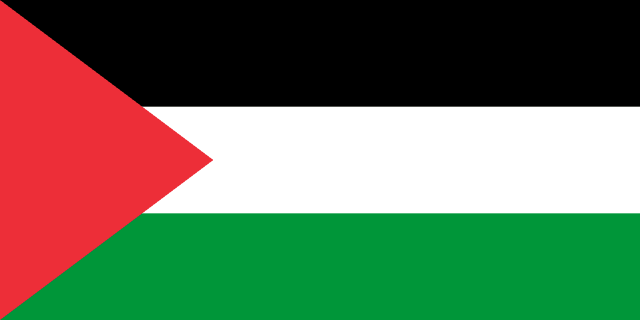

Palestine
State of Palestine
Asia
5,766,789
01:57 UTC+2
+970
.ps
Mount Nabi Yunis
1,030 m · 3,379 ft
Dead Sea
-432 m · -1,417 ft
362,689
Ramallah · 2026
725,378
Gaza · 2026
Location
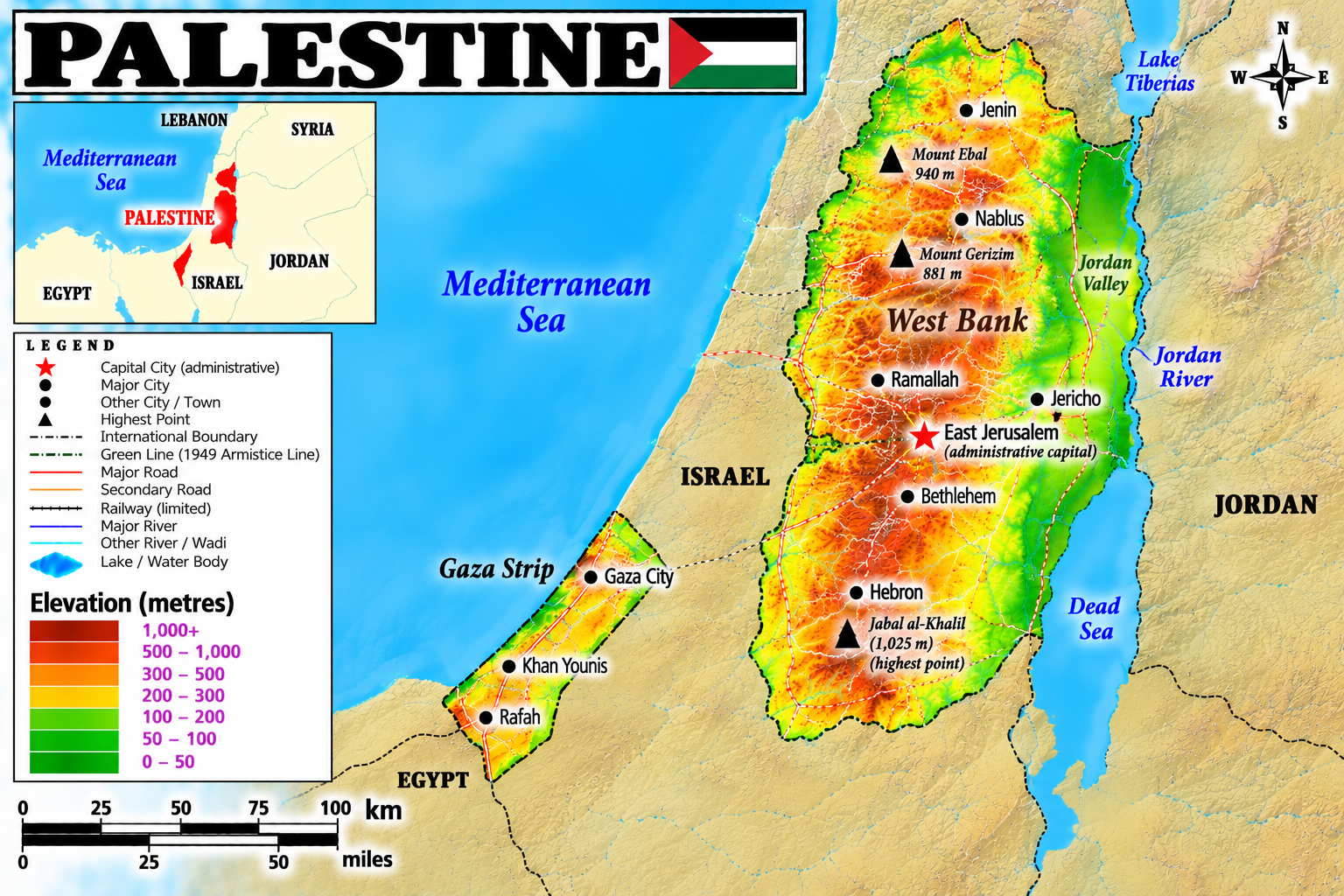
Palestine — Detailed Physical Map
The West Bank and Gaza Strip, Mount Ebal and Jabal al-Khalil, the Jordan River, East Jerusalem, Ramallah, Gaza City, Hebron and Bethlehem
Tourist Attractions

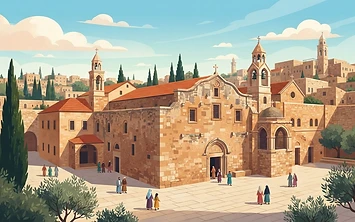
This ancient basilica is built over the cave traditionally identified as the birthplace of Jesus of Nazareth. It is one of the oldest Christian churches still in continuous daily use.
It is a UNESCO World Heritage site and a profound destination for pilgrims and history enthusiasts alike.

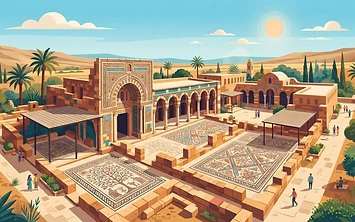
An 8th-century Umayyad-era archaeological site featuring an ornate bath complex, grand halls, and intricate mosaic floors. It is considered one of the most significant examples of early Islamic architecture in the region.
The site is home to the famous 'Tree of Life' mosaic, a masterpiece of ancient craftsmanship.

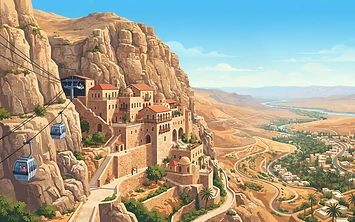
A Greek Orthodox monastery dramatically carved into the face of the Mount of Temptation cliffs overlooking the Jordan Valley. Visitors can reach the site via a cable car that offers panoramic views of the desert landscape.
The breathtaking cliffside architecture provides a unique and serene vantage point over the ancient city of Jericho.

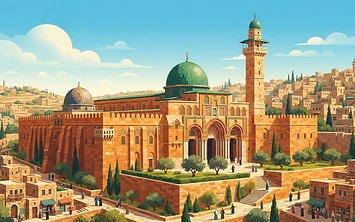
Also known as the Cave of the Patriarchs, this site is a deeply significant religious landmark housing the tombs of Abraham, Isaac, and Jacob. The structure features massive stone walls dating back to the Herodian period.
The site is one of the oldest continuously used religious structures in the world.

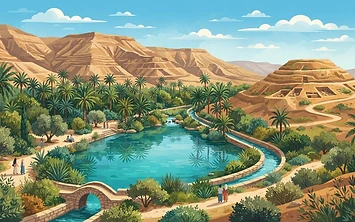
A lush, leafy oasis and spring located near the ancient Tell as-Sultan archaeological site. It has served as a vital water source for the city of Jericho for thousands of years.
It offers a refreshing, verdant escape from the surrounding desert heat.

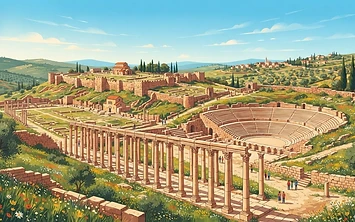
An archaeological park containing the ruins of the ancient city of Samaria, featuring Roman-era columns, a theater, and a forum. The site reflects layers of history from the Iron Age through the Byzantine period.
Walking through the well-preserved Roman colonnaded street offers a vivid glimpse into the region's classical past.
Geography
Nature
Mount Nabi Yunis
1,030 m / 3,379 ft
1.5% of land
≈ 93 km² of forest
FAO / World Bank, forest area (% of land area)
Explore the Nature Atlas251 km156 mi
Flows southwards into the Dead Sea through the Jordan Rift Valley.
105 km65 mi
Acts as an intermittent watercourse running from the Negev desert to the Mediterranean.
605 km²234 sq mi · 304 m deep
Lowest point on Earth's surface with extremely high salinity levels.
River lengths are whole-river figures, including any section beyond Palestine. Researched reference figures. Tap any name for where its name comes from and a Google Maps link.
Major Cities
No city data available for this nation.
Economy
Main exports
Palestine's leading export commodities and products.
Tap any export to learn more. Spot prices in USD only for Live Data subscribers.
Main imports
Palestine's leading import commodities and products.
Tap any import to learn more.
Military
Historical Timeline
10000 BCE
Natufian Culture Settles the Land
The Natufian culture established early sedentary settlements in the Levant, marking the transition to agriculture and permanent habitation. These populations are among the foundational ancestral groups of the region.
1200 BCE
Arrival of the Philistines
The Philistines, part of the Sea Peoples, migrated to the coastal plains of the Levant and established a powerful confederation of city-states. Their presence introduced new cultural practices and pottery styles to the area.
638
Islamic Conquest of Jerusalem
The Rashidun Caliphate took control of Jerusalem, bringing the region under Islamic rule and ushering in a new cultural and religious era. This marked the beginning of centuries of Islamic governance in Palestine.
1099
Crusader Capture of Jerusalem
Forces of the First Crusade captured Jerusalem and established the Kingdom of Jerusalem, fundamentally altering the political and religious landscape. The period saw significant fort construction and a temporary reorientation toward European power structures.
1517
Ottoman Empire Annexation
The Ottoman Empire conquered the region after defeating the Mamluk Sultanate, integrating it into their administrative system for four centuries. This era maintained relative stability and established the administrative divisions used until the early 20th century.
1917
The Balfour Declaration
The British government issued a public statement supporting the establishment of a national home for the Jewish people in Palestine. This declaration significantly influenced the geopolitical trajectory of the mandate territory.
1948
The Nakba and Establishment of Israel
Following the end of the British Mandate, the 1948 Arab-Israeli War led to the establishment of the State of Israel and the mass displacement of hundreds of thousands of Palestinians. This event remains a central defining trauma in Palestinian national identity.
1964
Formation of the Palestine Liberation Organization
The PLO was founded to advocate for Palestinian national rights and the liberation of the Palestinian people. It eventually became the internationally recognized representative of the Palestinian people.
1993
Signing of the Oslo Accords
The PLO and Israel signed an agreement creating the Palestinian Authority to provide limited self-governance in parts of the West Bank and Gaza. The accords were intended to be a framework for a final peace settlement.
2012
UN General Assembly Grants Observer Status
The United Nations upgraded Palestine's status to non-member observer state, reflecting growing international recognition of Palestinian statehood. This move enabled Palestine to join various international organizations and treaties.
2023
Escalation of the Gaza Conflict
Following an October 7 attack on Israel, a massive military offensive was launched in the Gaza Strip. The ensuing war resulted in extensive destruction, humanitarian crisis, and a significant shift in regional geopolitics.
2025
International Legal Proceedings at the ICJ
The International Court of Justice continued legal deliberations regarding the legality of the occupation and allegations of international law violations. This reflected the intensifying focus on legal and diplomatic pathways to address the enduring conflict.
National Anthem
فدائي
Said Al Muzayyin
Ali Ismael
1996
فدائي، فدائي، فدائي يا أرضي يا أرض الجدود فدائي، فدائي، فدائي يا شعبي يا شعب الخلود بعزمي وناري وبركان ثأري وأشواق دمي لأرضي وداري صعدت الجبال وخضت النضال قهرت المحال عبرت الحدود فدائي، فدائي، فدائي يا شعبي يا شعب الخلود بعون الكتائب وقصف المتاعب وعزمي وسكبي لروحي ودمي بأرضي وداري وناري وانتصاري لأحيا لأحيا وأحيا فدائي فدائي، فدائي، فدائي يا شعبي يا شعب الخلود
Fida'i was written by the Palestinian poet Said Al Muzayyin in the mid-1960s to serve as a revolutionary song for the Palestinian national movement. The music was composed by the Egyptian musician Ali Ismael, who was known for his work in Egyptian cinema and his support for various Arab nationalist movements. The anthem was officially adopted by the Palestine Liberation Organization (PLO) as the national anthem of the Palestinian people. Following the establishment of the Palestinian National Authority in 1996 as part of the Oslo Accords, it was formally adopted as the national anthem of the State of Palestine. The title 'Fida'i' translates to 'Freedom Fighter' or 'Fedayeen', reflecting the historical struggle for Palestinian self-determination. The lyrics emphasize themes of resistance, ancestral ties to the land, and the endurance of the Palestinian people. It is played at all official state functions and diplomatic events representing the State of Palestine.
National Holidays
Commemorates the beginning of the Gregorian calendar year and is observed as a public holiday.
A day dedicated to highlighting the rights, welfare, and challenges faced by children living in Palestine.
A day of solidarity with Palestinian prisoners held in Israeli detention centers and a call for their freedom.
An international holiday recognizing the social and economic achievements of the Palestinian working class.
Commemorates the 1948 exodus of Palestinians during the establishment of the State of Israel, marked by widespread remembrance.
Commemorates the 1988 Palestinian Declaration of Independence by the Palestinian National Council in Algiers.
Good News Today
International partnership launches platform to unify social protection in Palestine
The Palestinian Ministries of Social Development and Labor, in partnership with the ILO, launched a new platform to coordinate social protection programs. This initiative aims to improve support for vulnerable families and enhance the effectiveness of social services across the West Bank and Gaza Strip.
Fun Facts
Jericho Is The World's Oldest City
Jericho is widely considered the oldest continuously inhabited city in the world, with archaeological evidence of settlement dating back to 9,000 BCE.
Ancient Olive Tree Legacy
Some olive trees in the West Bank are estimated to be over 2,000 to 4,000 years old, making them among the oldest living trees on Earth.
Lowest Point On Dry Land
The Dead Sea, which borders the region, is the lowest point on the Earth's surface at over 400 meters below sea level.
The Famous Maqluba Dish
Maqluba, which translates to 'upside down,' is a traditional communal meal consisting of rice, meat, and vegetables that is dramatically flipped onto a serving platter.
Bethlehem's Church Of The Nativity
The Church of the Nativity in Bethlehem is one of the oldest continuously operating churches in the world, built over the grotto traditionally considered the birthplace of Jesus.
Traditional Palestinian Embroidery
Tatreez is a centuries-old style of cross-stitch embroidery traditionally used on dresses to signal a woman's village of origin and social status.
Hisham's Palace Mosaic Masterpiece
Hisham's Palace in Jericho houses one of the largest single-piece floor mosaics in the world, a stunning work of Umayyad-era Islamic art.
Palestine Sunbird National Symbol
The Palestine Sunbird is the national bird of the country, recognized for its vibrant, iridescent plumage and unique long, curved bill.
Ancient Pottery From Gaza
Gaza has a long history of traditional pottery production, particularly the distinct 'Gaza pottery' which is known for its durable, unglazed terracotta style.
Jerusalem Ka'ak Bread Tradition
Ka'ak is a unique, ring-shaped sesame bread sold from iconic street carts in Jerusalem, often served with za'atar and hard-boiled eggs.
Chuckies Trivia Quiz
Chuckies Trivia Quiz
Fifteen questions on Palestine — five easy, five medium, five hard. How far can you get?
Sports & Live Events
Language
Counting to 10
1
1
= 10 (n = 0)
World Dictionary
Discover and translate any word into all supported languages.