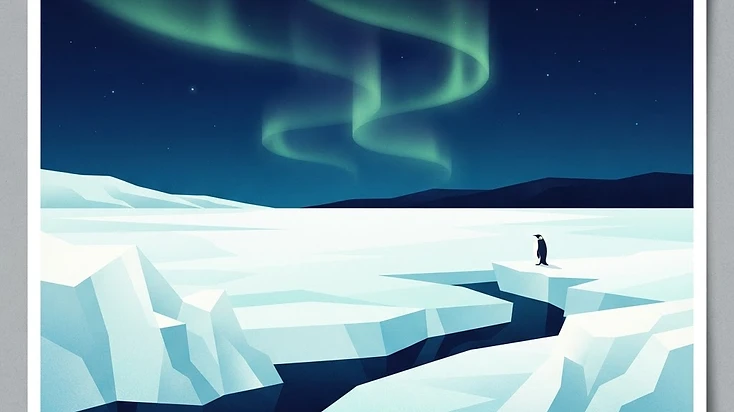
Ice sheets, ice caps, glaciers and frozen seas store about 68% of the planet's fresh water. The two great sheets in Antarctica and Greenland are kilometres thick and hold enough ice to raise global sea level by more than 65 metres if they ever melted completely.
Play the Ice Caps quiz26.5M km³
≈ 6.36M mi³
Antarctic ice
2.9M km³
≈ 0.7M mi³
Greenland ice
90%
Of world's ice
~66 m
≈ 216.5 ft
Sea-level potential
The ice sheets
A sheet is bigger than 50,000 km²; anything smaller is an ice cap or a glacier.
East Antarctic Ice Sheet
The largest single mass of ice on Earth, up to 4.8 km (2.98 mi) thick and grounded on high bedrock.
~21M km³
≈ 5.04M mi³
West Antarctic Ice Sheet
Marine-based and thinning at its edges, where warm ocean water gets underneath.
~3.8M km³
≈ 0.91M mi³
Greenland Ice Sheet
2.9M km³ (0.7M mi³) of ice losing roughly 250 billion tonnes a year.
1.71M km²
≈ 0.66M mi²
Ice caps
Domes smaller than a sheet — Vatnajökull in Iceland, Barnes Ice Cap in Canada, the Patagonian icefields.
Frozen sea and flowing ice
Sea ice floats and refreezes; glaciers are rivers of ice that never stop moving.
Arctic sea ice
Shrinks to its September low, roughly 40% smaller than in 1979.
~4M km² minimum
≈ 1.54M mi²
Antarctic sea ice
Peaks each September around a continent that is itself ringed by ice shelves.
~18M km² maximum
≈ 6.95M mi²
Mountain glaciers
Outside the two sheets, they lost about 267 billion tonnes a year between 2000 and 2019.
~198,000
Permafrost
Ground frozen for two years or more, holding twice the carbon of the entire atmosphere.
~23M km²
≈ 8.88M mi²
Ice shelves
Floating tongues of glacier that slow the ice behind them — when they collapse, the glaciers speed up.
Did you know?
- Antarctica is the world's largest desert: the interior receives less precipitation than the Sahara.
- Fresh snow reflects 80–90% of sunlight, which is why ice helps keep the poles and the whole planet cool.
- The Antarctic ice sheet is so heavy it presses the bedrock below sea level in places.
- Ice core bubbles trap ancient air — the oldest continuous records reach back 800,000 years.