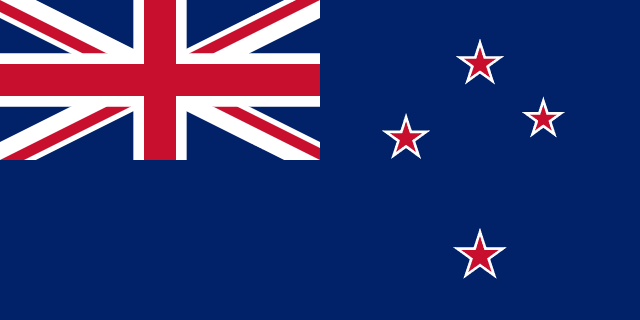
New Zealand
Oceania

5,287,479
07:32 UTC+13
+64
Location
Geography
Economy
Main exports
New Zealand's leading export commodities and products.
Subscribe to Live Data for live spot prices
Live commodity prices on every nation's exports — $100 AUD/year.
Tap any export to learn more. Spot prices in USD only for Live Data subscribers.
Main imports
New Zealand's leading import commodities and products.
Tap any import to learn more.
Military
Historical Timeline
1280
Arrival of the Māori
Polynesian voyagers arrived in Aotearoa New Zealand, establishing the foundations of Māori culture and society. They were the first humans to settle the previously uninhabited islands.
1840
Signing of the Treaty of Waitangi
Representatives of the British Crown and Māori chiefs signed the Treaty of Waitangi. It is considered New Zealand's founding document, establishing British sovereignty and Māori rights.
1845
New Zealand Wars Begin
A series of armed conflicts occurred between the British colonial government and Māori tribes. These disputes were primarily driven by tensions over land ownership and sovereignty.
1893
Women Gain the Right to Vote
New Zealand became the first self-governing country in the world to grant all women the right to vote in parliamentary elections. This followed a successful campaign led by Kate Sheppard.
1907
New Zealand Becomes a Dominion
New Zealand officially transitioned from a colony to a Dominion within the British Empire. This change reflected an increase in political autonomy and international status.
1915
Gallipoli Campaign
New Zealand soldiers fought alongside Australian forces as the ANZACs in the Gallipoli campaign during World War I. The event is widely viewed as a defining moment in the development of a distinct national identity.
1947
Adoption of the Statute of Westminster
New Zealand formally adopted the Statute of Westminster, gaining full legal independence from the British Parliament. This allowed the nation to conduct its own foreign affairs.
1975
Establishment of the Waitangi Tribunal
The Waitangi Tribunal was created as a permanent commission of inquiry to investigate claims of breaches of the Treaty of Waitangi. It plays a central role in the reconciliation process between the Crown and Māori.
1984
Implementation of Rogernomics
The government initiated a series of radical free-market economic reforms, often called Rogernomics. These policies transformed the country from a protected economy to one of the most open in the world.
1987
Māori Language Act
The Māori Language Act was passed, making te reo Māori an official language of New Zealand. This move supported the revitalization of indigenous language and culture.
2011
Christchurch Earthquake
A devastating magnitude 6.3 earthquake struck Christchurch, causing significant loss of life and massive infrastructure damage. It led to the largest and most complex rebuild project in the country's history.
2023
General Election and Coalition Government
A general election led to the formation of a coalition government comprising the National, ACT, and New Zealand First parties. This change in leadership marked a significant shift in national policy direction.
National Holidays
Marks the beginning of the Gregorian calendar year.
Commemorates the signing of the Treaty of Waitangi in 1840, considered New Zealand's founding document.
A national day of remembrance for all New Zealanders killed in war and to honour returned service personnel.
An official holiday celebrating the birthday of the reigning monarch of New Zealand.
Celebrates the achievement of the eight-hour working day in New Zealand and honours the contribution of workers to the country's economy.
An annual Christian festival commemorating the birth of Jesus Christ, widely observed as a public holiday.
Language
Counting to 10
1
1
= 10 (n = 0)
Counting to 10
1
1
= 10 (n = 0)
World Dictionary
Discover and translate any word into all supported languages.
The multilingual Dictionary is a Nations Pro feature.
Upgrade to Pro